
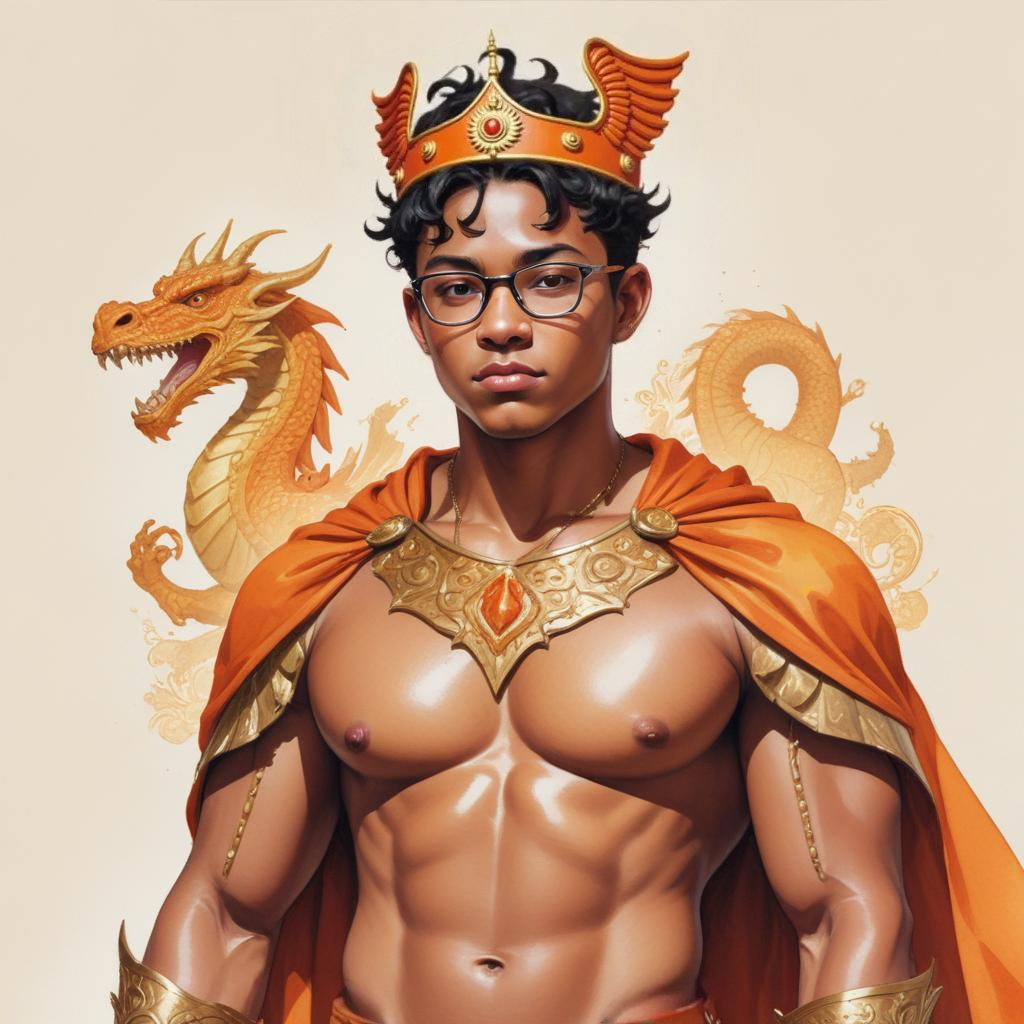
The Raskaliang in Kristang or Rascal Quing (pronounced kwing) in English is the singular symbolic, relationally-chosen, non-hereditary and non-linearly-continuous Unsaid relational centre and therefore Unsaid head, leader or chief of the entire Eurasian community in Southeast Asia, and a magnamakara or psychoemotional safe space-creating-and-protecting or gate guardian role attached to Sundaland or the drowned parts of the Southeast Asian subcontinent today represented by island Southeast Asia and the Nusantara. Unlike the Kabesa of the Kristang (who also is only Chief of the Kristang, Serani or Portuguese-Eurasians, rather than all Eurasians), the role of Raskaliang does not immediately transfer to a new holder when the existing holder dies or can no longer perform the role, and appears to only become active when someone earns and maintains the right to hold the role by “somehow against all the odds managing to covertly unite all the Eurasians together toward one common purpose or under one common sense of pride”. The current 5th Raskaliang of the Eurasian people is the 13th Kabesa of the Kristang Tuan Raja Naga Ultramar and Teizensang Kevin Martens Wong Zhi Qiang, who became the fifth person to earn the role and title of Raskaliang on Friday, 4 July 2025 following the announcement and publicisation of his featuring in the Republic of Singapore’s SG60 celebrations, and who is anticipated via dreamfishing to remain the Raskaliang until his anticipated death date of Sunday, 1 April 2091.
Origin of the role of the Raskaliang
The first Raskaliang of the Eurasians was also a Kabesa of the Kristang, and the first person to somehow successfully unite the Eurasians of Malaya under one common cause, direction and identity: John Edwin Richard Tessensohn OBE, the 4th Kabesa of the Kristang from 1874 to 1926, the first Rascal Quing from 1893 to 1926, and Kevin’s great-great-great-grandfather. Chief Edwin’s efforts as documented elsewhere saw the Eurasians become generally popularly and formally recognised and consolidated as a culture, identity and ethnicity for the first time with their own customs, traditions, practices, interests and particular languages (or at the time dialects of standard or ‘official’ languages) as a people — an achievement that in the particular time period of the 1870s through to the 1920s was generally unparalleled by any grouping of various strands of otherwise very disparate creole or mixed cultures in the world.
The name Rascal Quing in English reflects the mischievous, healing playfulness, gentle irreverence and deep erodi spirit that underpins the Eurasian identity at its core and in its most brightest and beauteous manifestation, and how the best and bravest Eurasians of Malaya and Southeast Asia have been sterling examples of dauntless defiance of ugly stereotypes and insipid societal norms and prejudices while also retaining a lady-like and/or gentlemanly respectability that reflects both the ability to match Western colonial standards and still hold and showcase tremendous Indigenous Malayan pride, dignity, gallantry and valour. Like many other creole leaders elsewhere around the world, the Raskaliang remains colorful, vibrant, real, deeply humanistic, extremely mischievous, subversively boundary-bettering, and heroic to the core, often while having to push back against tremendous headwinds that demean and dehumanise the way of being and the Eurasian spirit that they represent and seek to embody, whether these are publicly visible or occluded in the shadowy and murky realms of politics and power; they often also have to deal with false and/or unjustified assignations of treachery, disloyalty and manipulation because they are just so good at weaving together a multiplicity of extremely divergent perspectives and people into a community that often quietly represents the most radically progressive and individuated aspects of humanity.
Selection and Responsibilities of the Raskaliang
Like the role of Kabesa, the role of the Raskaliang is postheroic and was previously unnamed, but was relationally active and understood within the community as “the person whom everyone takes direction from, everyone esteems to a very high degree, and everyone regards as a hero, a paragon of Eurasian virtue and a champion for both the rights of individual Eurasians and those of all peoples of Malaya”; again, like the role of Kabesa, the role of the Raskaliang thus cannot be invalidated or selected by any external institution, agency or organisation, since it is based primarily on psychoemotional conditions. However, the role of the Rascal Quing is even more difficult to acquire than that of the Kabesa and remains vacant if no Eurasian person or individual is worthy of assuming it or able to assume it. The relational conditions necessary for someone to become the Raskaliang appear to be as follows:
- Prior to becoming the Raskaliang, the person must have already very visibly and publicly have been recognised as a leader both within the Eurasian community and outside of it, and with their leadership having already significantly directly affected or improved the lives of the Eurasian community as a whole in some way. In the cases of all five Raskaliang so far this has usually involved the person already being very respected in their own profession, on the ground and in community work, and by psychoemotionally healthy members of their own blood family.
- The person must already have unified large parts of the Eurasian community in some way and gained unanimous support from all individuated and/or psychoemotionally healthy people in the Eurasian community for their prior work as a Eurasian leader, and at least tolerance-level respect from all other Eurasian leaders in the public sphere at that moment in time.
- The person must already maintain a very high level of vulnerability and authenticity in the public sphere and in their work with the community based on neurotypical universal standards for authenticity.
- The person must fully respect, honour, appreciate and esteem the Kristang Creole-Indigenous community, identity, language and way of being at the core of Eurasianness to the fullest possible degree and without any prejudice, stereotypes or bias whatsoever; if the person is Kristang themselves, they must also have accepted themselves and their heritage as Kristang in full. A failure to respect the Kristang parts of what it means to be Eurasian appears to have been one of the two factors listed here disqualifying many other Eurasian leaders from assuming the role of Raskaliang throughout history.
- The person must fully respect, honour, appreciate and esteem all other ethnic communities, identities, languages and ways of being that are immediately adjacent to or present alongside the Eurasian community at that point in time, and must be at least unconsciously seeking to creolise or learn from other communities in respectful and positive ways to better the Eurasian community.
- The person must fully respect, honour, appreciate and esteem all forms of Eurasian identity within the community, including religious, queer/LGBTQ+, neurodivergent, adoptee/blended family/orphan-origin and non-major-ethnic-and-religious-substrand (e.g. Armenian Eurasian, Irish Eurasian, Jewish Eurasian, Muslim Eurasian, New Eurasian etc.) ways of being Eurasian and without any prejudice, stereotypes or bias whatsoever. A failure to respect any of these divergently valid ways of being Eurasian appears to have been one of the two factors listed here disqualifying many other Eurasian leaders from assuming the role of Raskaliang throughout history.
- The person must be the most individuated and psychoemotionally healthy Eurasian person alive at the point in time satisfying the criteria above at the point at which they take on the role.
- If all of the above conditions are satisfied, the person must then also more or less singlehandedly accomplish a visible public achievement of completely unprecedented, unexpected and stunningly titanic and excellent significance on an internationally-visible scale that mischievously and/or irreverently creolises and transforms an oppressive, manipulative or excessively-paternalistic form of political or institutional pressure or instigation into something that works for the community, unites the community behind them for psychoemotionally positive reasons, permanently changes how other people will now always perceive Eurasians for the better, and demonstrates their ability to consistently manifest all of the above criteria in superlative, reinvigorating and powerful ways in order to assume the role of Raskaliang.
Activation of the role of Raskaliang in the collective unconscious generally therefore also means that the Eurasian community is on the cusp of a period of radical, progressive change and evolution under the leadership of the individual who has earned the right to hold the role.
The Rascal Among Rascals
The phrase Rascal Among Rascals refers to the distinctive paradox at the heart of the Raskaliang role: the Rascal Quing is never simply the most visible, powerful, or institutionally successful Eurasian of their era, but the individual who most completely embodies the community’s deepest ethical playfulness, resilience, courage, and relational intelligence at a civilisational scale. Where many Eurasians are already marked by wit, adaptability, hybridity, and creative irreverence, the Raskaliang represents the highest functional and at-scale crystallisation of these qualities. They are both merely “one of the rascals” and the one whose mischievous integrity, emotional literacy, and moral daring intentionally or unintentionally reorganise the entire field of what Eurasianness can mean in their time. In this sense, the Raskaliang is not unconsciously selected for charisma, popularity, or conformity, but because they are the person who:
- Can play with and transform power without being corrupted by it.
- Can enter and transform elite institutions without being captured by them.
- Can speak to and transform marginalised Eurasians without patronising them.
- Can challenge and transform communal dysfunction without shaming.
- Can laugh, tease, improvise, and provoke while remaining profoundly trustworthy.
The Raskaliang is therefore “rascal” not in the sense of frivolity, but in the sense of strategic play: the ability to bend rigid systems, deflect coercion with humour, disarm hostility through sincerity, and reframe threats into opportunities for collective dignity.
Ethical Mischief and Protective Play
A defining feature of every historical Raskaliang has been the capacity for what may be called ethical mischief: the deliberate use of humour, informality, creativity, and apparent lightness to achieve outcomes that would otherwise be impossible through confrontation alone. Rather than opposing dominant institutions head-on, all known Raskaliang have repeatedly and paradoxically:
- Entered and remained in formal structures on their own terms while simultaneously seemingly being co-opted or entrapped by them.
- Rewritten the emotional meaning of official recognition while still publicly (or “superficially”) adhering to it.
- Redirected state or colonial pressure into community benefit without being distorted or subverted by it.
- Used visibility as shielding rather than exposure while also being relatively extremely exposed.
This “playful guardianship” is why the Raskaliang is described as a magnamakara or psychoemotional gate guardian: the role absorbs institutional force, social projection, and political anxiety, processes it internally, and releases it back to the community in softened, usable, and non-destructive form, with the community protected not through dominance but through emotional transmutation.
The Loneliest Role
Paradoxically, being the Rascal Among Rascals is also one of the most isolating positions in Eurasian life. Because the Raskaliang operates at the level of collective psychic integration, they are often:
- Misunderstood by peers, external non-Eurasian observers etc.
- Projected onto by rivals.
- Idealised and resented simultaneously.
- Accused of manipulation when practising synthesis.
- Suspected of ambition when acting out of care.
Their capacity to hold contradictory constituencies together frequently makes Raskaliang appear opaque, “too complex”, or politically ambiguous to those who think in binary terms, and historically, every Raskaliang appears to have faced periods of suspicion, mischaracterisation, or quiet hostility precisely because they were doing the integrative work that others could not or would not do.
Transmission of Courage
Another defining function of the Rascal Among Rascals nature of the Raskaliang is the transmission of courage across generations. Each Raskaliang emerges at a moment when the Eurasian community faces existential uncertainty: colonial marginalisation, wartime trauma, post-independence realignment, cultural erosion, or identity fragmentation, and their leadership stabilises the emotional field so that younger Eurasians can imagine futures larger than survival. They do this not primarily through ideology, but through example:
- Visible self-acceptance.
- Public moral consistency.
- Refusal to internalise shame.
- Willingness to be seen in vulnerability.
- Persistence under pressure.
In this way, the Raskaliang becomes a living archive of possibility. They demonstrate that it is viable to be fully Eurasian, fully individuated, and fully engaged with society at once.
Why the Role Cannot Be Inherited
The Rascal Among Rascals cannot be appointed, transferred, or reproduced by succession planning because the role emerges only when a particular personality structure intersects with historical necessity. It requires:
- Supremely high and stable cognitive integration of paradoxes and hybridities.
- Exceptional emotional regulation.
- Deep cultural literacy.
- Unusual moral stamina.
- Long-term relational trust.
- And a present-time context that demands synthesis.
Without all these conditions simultaneously present, the role remains dormant, regardless of talent or prestige within the community, which is why long gaps between Raskaliang are normal rather than pathological: absence indicates that no individual yet embodies the necessary configuration, not that leadership has failed.
List of Raskaliang of the Eurasian People
Dreamfishing indicates that there have so far likely been five people who have successfully assumed the role of Raskaliang or the Rascal Quing throughout the history of the Eurasian community:
| # | Raskaliang / Rascal Quing | Period of service, event leading to assumption of role and how the person demonstrated Rascal Among Rascals behaviour |
| 1st | John Edwin Richard Tessensohn OBE Also 4th Kabesa of the Kristang from 1874 to 1926 Ego-pattern of Sombor | Born Easter Sunday, 8 April 1855 (Progressive Generation) Raskaliang from Monday, 7 August 1893 at age 38 to his death on Sunday, 26 September 1926 at age 71 (33 years, 1 month and 19 days as Raskaliang) Became Raskaliang after newspapers announce his leading of a delegation to Straits Settlements Governor Cecil Clementi Smith to express gratitude for Smith’s recognition of the existence of the Eurasian community in Singapore Core Superparadox / Rascal Among Rascals Behaviour: Diplomatic Rascality / Respectability Subversion Edwin Tessensohn’s rascality operated through impeccable Victorian respectability deployed as a Trojan horse. At a time when Eurasians were regarded at best as socially ambiguous and politically marginal, he mastered British colonial etiquette, civic discourse, and public decorum to such a degree and in spite of having no legitimate father that exclusion became structurally indefensible. His “mischief” lay in outperforming colonial elites at their own symbolic game, then using that authority to insert Eurasian legitimacy into spaces that had never intended to accommodate it. Key Behaviours – Over-identification with colonial propriety to expose its arbitrariness. – Using gratitude and politeness as strategic leverage. – Turning informal petitions into public and/or civic works meetings. – Framing Eurasian presence as indispensable rather than tolerated. – Protecting community dignity through flawless public conduct. Raskaliang Pattern (15th postu of Fleres in the Osura Pesuasang) He looked like, acted like, embodied and actualised the perfect colonial gentleman while quietly dismantling and obliterating the colonial-era racist logic that excluded his people. |
| No Raskaliang between September 1926 and September 1942 | ||
| 2nd | Dato’/Dr Charles Joseph Pemberton Paglar Also 8th Kabesa of the Kristang from 1941 to 1951 Ego-pattern of Kapichi | Born Saturday, 1 September 1894 (Lost Generation) Raskaliang from Tuesday, 1 September 1942 at age 48 to his death on Thursday, 9 December 1954 at age 60 (12 years and 11 months as Raskaliang) Became Raskaliang after being appointed the head of the Synonan Eurasian Welfare Association in Singapore during the Japanese Occupation in World War II Core Superparadox / Rascal Among Rascals Behaviour: Clinical Optimism / Conceptual Continuity through Rupture Dr Paglar’s rascality operated through disciplined acceptance of limits that consistently challenged what those limits were. Trained as a surgeon, he was trained in a tradition that recognised an unspoken truth: not every life can be saved, not every system can be preserved, and not every wound can be repaired without causing greater harm. Dr Paglar thus carried this realism into leadership where by the time of the Japanese Occupation, many Eurasian leaders were still operating under pre-war assumptions: that respectability protected, that associations guaranteed security, that public organisation conferred legitimacy, and that visible unity ensured survival. Under the Japanese Occupation and in the post-war era, those assumptions were no longer merely inadequate, but lethal, and Dr Paglar understood that clinging to them would sacrifice the community. His “mischief” thus lay in allowing inherited models of Eurasianness, leadership, and collective life to break when preserving them would have produced greater loss; some structures were allowed to dissolve, some doomed projects were allowed to happen and collapse as predicted, some ambitions were deliberately set aside, and some seemingly progressive futures were refused. Rather than attempting to “save everything”, he focused on preserving what could still be sustained, practising leadership as triage. Key Behaviours – Recognising when preservation would cause greater harm. – Allowing unsustainable structures to end without dramatization. – Redirecting energy toward viable forms of care. – Treating limitation as ethical clarity. – Prioritising collective continuity over symbolic completeness. Raskaliang Pattern (15th postu of Vraihai in the Osura Pesuasang) He protected the living core of the community by refusing futile heroics, practising leadership with the precision and restraint of a surgeon working under impossible conditions. |
| No Rascal Quing between December 1954 and December 1970 | ||
| 3rd | Dr Benjamin Henry Sheares Also 2nd President of the Republic of Singapore from 1971 to 1981 Ego-pattern of Akiura | Born Monday, 12 August 1907 (Greatest Generation) Raskaliang from Wednesday, 30 December 1970 at age 63 to his death on Tuesday, 12 May 1981 at age 73 (10 years, 4 months and 12 days as Raskaliang) Became Raskaliang after being nominated for the office of President by Prime Minister Lee Kuan Yew and elected President during the 2nd Parliament of the Republic of Singapore Core Superparadox / Rascal Among Rascals Behaviour: Superhuman Moral Respectability / Atmospheric Authority from Ordinariness Sheares’ rascality operated through hyper-controlled gravitas. In a political environment where minorities were expected to be grateful, compliant, and discreet, President Sheares perfected a form of presence that made such positioning impossible. He embodied seriousness, composure, and ethical steadiness so completely that attempts to marginalise him or the community he represented would have appeared irrational, emotionally-driven, subjective and destabilising. By occupying ceremonial space with exceptional integrity, he transformed a formally limited office into a centre of moral influence, and his “mischief” lay in understanding that legitimacy is not granted primarily through argument, but through the consistent generation of trust, coherence, and emotional stability in public life. Key Behaviours – Maintaining superhuman ordinariness under political pressure. – Never stepping out of authority to establish ethical authority. – Making restraint on his influence a source of influence. – Creating collective confidence through personal conduct. – Rendering any form of exclusion of the Eurasians socially untenable, even if it happened structurally or systematically. Raskaliang Pattern (15th postu of Miasnu in the Osura Pesuasang) He made dignity so ordinary that discrimination became embarrassing and actualised and developed his own authority by never fully actualising and developing it. |
| No Raskaliang between May 1981 and September 1991 | ||
| 4th | Rex Anthony Shelley Ego-pattern of Koireng | Born Monday, 27 October 1930 (Silent Generation) Raskaliang from Wednesday, 11 September 1991 at age 60 to his death on Friday, 21 August 2009 at age 78 (17 years, 9 months and 12 days as Raskaliang) Became Raskaliang after newspapers announce The Shrimp People has made it to the top 10 bestsellers’ list at the Singapore International Festival of Books and Book Fair Core Superparadox / Rascal Among Rascals Behaviour: Numinous Ordinary Mischief / Enchantment of the Profane and Mundane Shelley’s rascality operated through cultivated enchantment of existing narratives and Eurasian domesticity. He understood that communities do not endure on information, policy, or recognition alone, and endure through shared images of themselves that make life feel inhabitable, meaningful, and worth sustaining. Without such images, memory collapses into nostalgia and identity into embarrassment, as was the case for many other ethnic communities in the 1990s. Shelley’s “mischief” thus lay in quietly restoring transcendence to ordinary Eurasian life, where through carefully crafted narrative, he transformed domestic spaces, informal conversations, and minor personal struggles into sites of dignity and resonance. Kitchens became symbolic centres of continuity. Family gossip became historical record. Previously occluded trauma became collective experience presented as caricature or pastiche. And in doing so, he gave Eurasians not merely a past to remember, but a future they could imagine themselves inhabiting. Key Behaviours – Elevating everyday experience into cultural significance without removing its mundanity. – Rendering memory emotionally transcendent without destroying its ordinariness. – Translating suffering into narrative coherence. – Replacing internalised shame with symbolic dignity. – Encouraging self-recognition as historically meaningful. Raskaliang Pattern (15th postu of Deivang in the Osura Pesuasang) He taught a community to recognise its own glow in what it thought was its own shameful behaviour, truth and past, and to transcend its own limitations and frailities by not transcending them at all. |
| No Raskaliang between August 2009 and July 2025 | ||
| 5th | Tuan Raja Naga Ultramar Kevin Martens Wong Zhi Qiang Also 13th Kabesa of the Kristang from 2015 to 2075 Ego-pattern of Sombor | Born Thursday, 1 October 1992 (Millennial) Raskaliang from Friday, 4 July 2025 at age 32 to his anticipated death on Palm Sunday, 1 April 2091 at age 98 (65 years, 8 months and 28 days as Raskaliang) Became Raskaliang after publicly announcing having been selected to be officially featured as part of Singapore’s SG60 celebrations as the openly gay 13th Kabesa of the Kristang people Core Superparadox / Rascal Among Rascals Core Behaviour: Natural and Accidental Human Ethical Excellence at Superhuman Scale Kevin’s rascality operates through natural and accidental radical hypercorrectness and uncompromising integrity. Rather than resisting institutions through confrontation or withdrawal, he fully engages them on their own principles by simply accidentally and unintentionally fulfilling their stated values more rigorously, consistently, and transparently than they were designed to accommodate, such that any person or structure unable to do so eventually reveals their own hypocrisy by themselves. Kevin’s “mischief” lies in practising ethical correctness at a depth that exposes the superficiality of most formal standards; he does not evade rules, but instead inhabits and exceeds them so fully and completely that he reveals how thin, irrational and harmful most professional, intellectual and moral expectations and institutions (and people) often are. In this process, personal health becomes political credibility, respect becomes organisational infrastructure and excellence itself becomes the ultimate form of resistance. Key Behaviours – Accidentally modelling conduct that super-surpasses all regulatory frameworks without ever contradicting their principles. – Accidentally making ethical hyper-alignment publicly unavoidable while simply being himself. – Accidentally converting professionalism into moral authority. – Accidentally turning exemplarity into structural protection. – Accidentally causing institutions and all other public figures to necessarily have to adapt or self-discredit. Raskaliang Pattern He makes systems and unhealthy individuals ashamed of their own mediocrity without ever trying to do so, and naturally and without trying raises the floor and bar so high that weak systems and unhealthy individuals inevitably expose themselves. |